Rotten Lilac Roots Discovered in Shirley, Croydon CR0
A Lilac with a Rotten Secret: What We Discovered in Shirley, Croydon
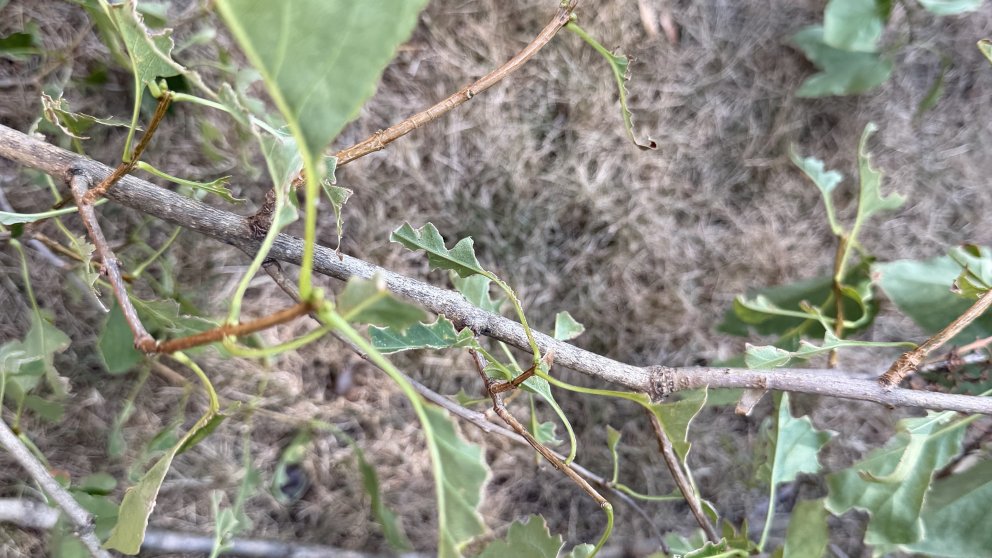
A lilac can look as though it is simply having a bad season: fewer leaves, bare branches and some untidy growth. Sometimes, however, the real problem is much more serious than anything visible above ground.
During a recent garden maintenance visit in Shirley, Croydon, CR0, we noticed that an established lilac was showing several worrying symptoms:
- Sections of the plant were dying back
- Many leaves had been eaten or damaged
- The crown contained a large amount of dry, dead wood
- Several main stems appeared weak and unstable
What began as routine deadwood removal quickly turned into a much more serious investigation.
The first warning signs
The lilac had clearly lost some of its vigour. There were damaged leaves, thinning growth and a noticeable amount of dead wood among the living stems.
Leaf damage can make a plant look unhealthy, but chewed leaves alone do not normally explain why large woody stems are dying or becoming unstable. Insects may have been feeding on the foliage, but the decline suggested that something else was happening lower down.
We started carefully removing the dead branches to improve the plant’s appearance and assess how much healthy growth remained.
That was when the lilac revealed its rotten secret.
The trunks were moving from the base
As the dead wood was removed, we noticed that the main trunks were unusually loose. They were not simply flexible branches moving in the wind—the entire stems were shifting where they joined the root system.
A healthy, established lilac should be firmly anchored in the ground. When several mature stems move independently from the base, it can indicate that the roots or the root crown have lost their structural strength.
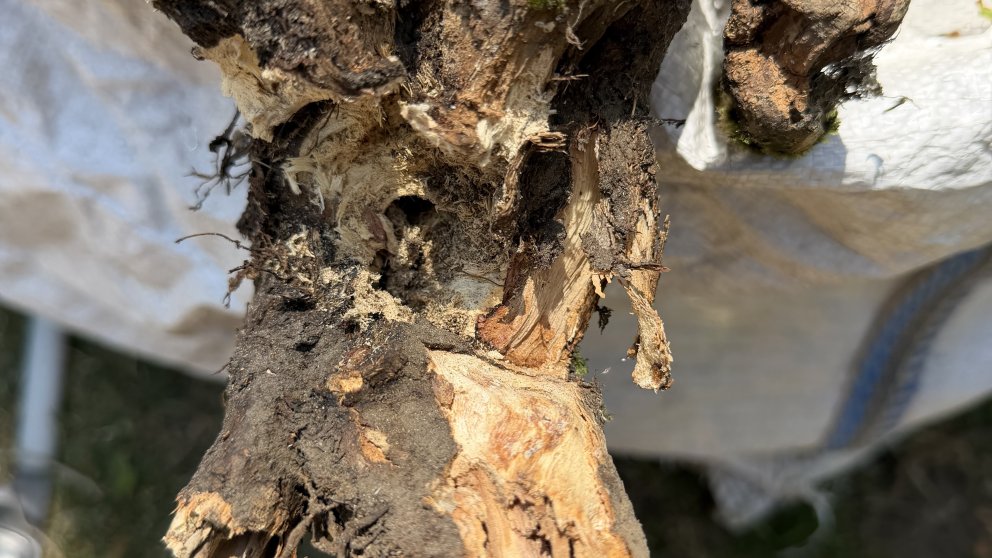
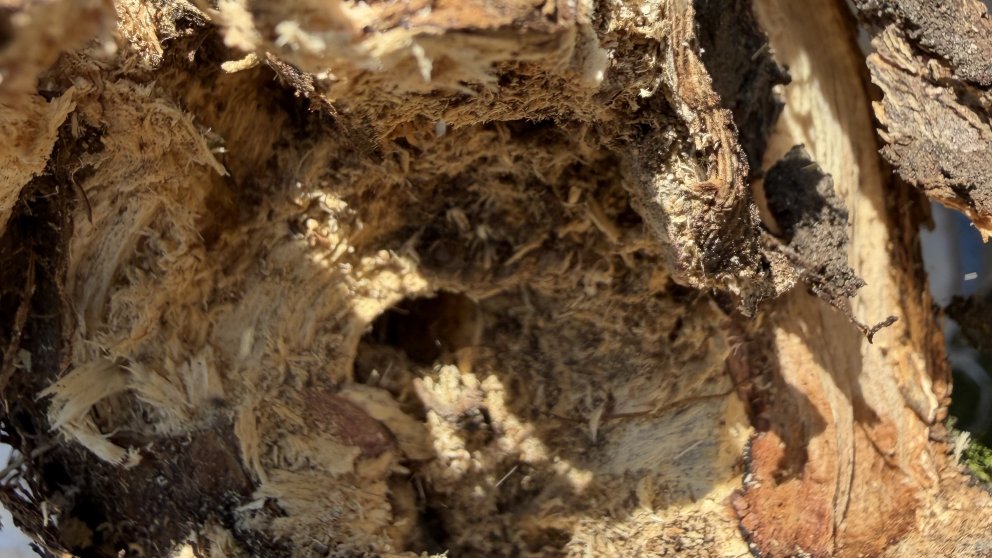
Further inspection showed extensive decay around the base of the plant. The roots and lower sections of the stems appeared soft, hollow and badly deteriorated.
What looked like a reasonably solid shrub from the outside had become something closer to a wooden croissant on the inside: dry, flaky and mostly air.
What caused the lilac to decline?
It is not possible to confirm a single cause from appearance alone. Root and crown decay can develop because of several interacting problems, including:
- Poorly drained or persistently wet soil
- Damage to the roots or lower stems
- Soil or mulch piled against the base
- Old pruning wounds
- Fungal decay entering weakened wood
- Soil compaction
- Drought stress followed by prolonged wet conditions
- Natural decline in an old, multi-stemmed lilac
The eaten leaves may have placed additional stress on the plant, but they were unlikely to be the sole cause of the root failure.
This is an important distinction. Leaf damage is easy to see, so it often receives all the attention. Meanwhile, the more serious problem may be developing quietly below ground.
Were insects responsible for the damaged leaves?
Several garden pests can feed on lilac foliage, leaving holes, ragged edges or partially eaten leaves. The pattern of damage, the time of year and the presence of larvae or insects would all need to be considered before identifying the exact culprit.
However, leaf-eating insects do not automatically mean that the roots are being attacked by the same pest.
In this case, the leaf damage, deadwood and root decay may have been connected through the general weakening of the plant, or they may have been separate problems occurring at the same time.
Before applying any insecticide, it is important to identify whether a damaging pest is still present. Spraying a declining plant without identifying the cause may harm beneficial insects while doing nothing to resolve the underlying root problem.
Why rotten roots are a safety concern
Once the root crown and main roots have decayed, the plant can no longer reliably support its stems.
Lilacs are often grown as large, multi-stemmed shrubs. Mature branches can be surprisingly heavy, particularly when covered in leaves or wet after rainfall.
If the root system is severely compromised, stems may:
- Split away from the base
- Fall during strong wind
- Damage nearby fencing or structures
- Collapse onto paths or seating areas
- Become dangerous to anyone working around them
A plant may still produce leaves even when much of its supporting wood has decayed. Green growth therefore does not always mean that a shrub is structurally safe.
In our Shirley case, the movement of the trunks and the extent of the rotten roots showed that this was no longer only a pruning issue.
Can a lilac recover from root rot?
A lilac with limited dieback may sometimes recover when the cause is identified early. Possible remedial work can include:
- Improving drainage
- Removing excessive soil or mulch from around the stem
- Pruning dead and diseased branches
- Reducing competition from nearby plants
- Improving compacted soil
- Watering appropriately during drought
- Monitoring the plant over several seasons
Unfortunately, extensive structural decay is different.
Once the central root crown and several major roots have rotted away, pruning the top growth cannot rebuild the missing support below. Wood treatments, paints and sealants cannot restore the strength of decayed roots.
Where most of the stems are unstable, removal may be the safest and most practical option.
Signs of root or crown decay to look out for
Garden owners should investigate further when a mature shrub or small tree shows a combination of the following symptoms:
Repeated dieback
One dead branch may result from minor damage. Several dying stems can suggest a wider problem affecting the plant.
Large amounts of dead wood
A healthy lilac may naturally contain a few old branches, but extensive deadwood throughout the crown should not be ignored.
Movement at ground level
Gently moving a small stem may be normal. Movement of the entire trunk from the root area is much more concerning.
Soft or crumbly wood
Healthy wood should feel firm. Wood that breaks apart easily, feels spongy or turns into dusty fibres is likely to be decaying.
Cavities at the base
Holes and hollow sections can collect moisture and organic debris, creating suitable conditions for further deterioration.
Loose or missing bark
Bark separating from the lower stem may indicate that the tissue underneath has died.
Fungal fruiting bodies
Mushrooms or brackets growing around the roots or lower trunk can sometimes indicate decaying wood below ground.
Sudden leaning
A new or increasing lean may mean that the root system is no longer holding the plant securely.
Avoid piling mulch against the stems
Mulch is extremely useful for suppressing weeds and conserving soil moisture, particularly during hot, dry summers.
However, compost, soil and woodchip should not be piled directly against the stems of lilacs, shrubs or trees. Keeping the base constantly damp can encourage bark deterioration and make existing damage worse.
Apply mulch across the root area, but leave a small clear space around the root crown.
A useful rule is:
Mulch the soil, not the trunk.
Your lilac does not need to be tucked into bed.
What should happen after removal?
Removing a badly decayed plant is only part of the solution. Before planting another shrub in the same location, the site should be assessed.
This may include:
- Removing badly decomposed roots
- Checking whether water collects in the planting hole
- Loosening compacted ground
- Examining the soil level around the root crown
- Adding organic matter where appropriate
- Selecting a replacement suited to the available light and drainage
- Avoiding planting the new shrub too deeply
- Monitoring the area for continued fungal activity
If poor drainage contributed to the original decline, replacing the lilac immediately without improving the soil may lead to the same problem again.
The importance of investigating plant decline
This job is a good example of why deadwood should not always be treated as a purely cosmetic problem.
Removing dead branches helped us uncover the instability at the base of the lilac. Without closer inspection, the shrub might have remained in place until one or more stems collapsed.
When a plant shows leaf damage, dieback and declining growth at the same time, it is worth looking at the whole plant—not just the most obvious symptoms.
The leaves may attract attention, but the roots usually have the final word.
Garden maintenance in Shirley and Croydon
Grass Barbers provides professional garden maintenance, shrub pruning, planting and garden clearance services throughout Shirley, Croydon CR0 and the surrounding areas of South London and Surrey.
During our visits, we do more than cut back visible growth. We also look for signs of plant decline, damaged stems, deadwood and potentially unstable shrubs.
Early investigation can sometimes save a plant. Where it cannot, it can at least help prevent an unexpected collapse.
To arrange a garden maintenance visit or request a quotation, visit grassbarbers.co.uk.