Autumn Garden Clearance in London & Surrey | Grass Barbers
Autumn is the most underrated month in the garden calendar. Most London and Surrey gardens get their one big tidy in spring — but by then, brambles have rooted through the fence line, bindweed has spent a winter weaving itself into the shrub beds, and last autumn's leaves have rotted into a soggy mat that smothers the lawn. A proper autumn garden clearance, done between late October and early December, prevents all of it and sets the garden up to look after itself until spring.
Why autumn is the best time for a garden clearance
Three things happen in autumn that make clearance work easier, faster and cheaper than at any other time of year.
1. Plants are going dormant. Brambles, nettles and bindweed stop actively growing, so cutting them back now means they won't regrow before winter. The root systems are still visible and accessible — far easier to grub out than in spring, when fresh growth hides the crowns.
2. You can see the bones of the garden. Once leaves drop, the true structure of a garden is exposed. Overgrown boundaries, damaged fences, self-seeded saplings and collapsed perennials are all visible in a way they simply aren't in June. Autumn is when you find out what the garden actually needs.
3. The ground is still workable. Soil is warm enough to dig and weed through most of November across London and Surrey, but wet enough that roots lift cleanly. By January, heavy clay soils turn to porridge and the window closes.
What an autumn garden clearance should include
A proper autumn clearance is more than a leaf-rake. Done well, it covers:
Leaf clearance and disposal. A thick layer of wet leaves left on a lawn over winter will kill the grass beneath it and encourage moss. Leaves on beds, by contrast, can stay as mulch — but leaves on lawns, paths, patios and driveways need clearing before they become a slip hazard and a smothering mat.
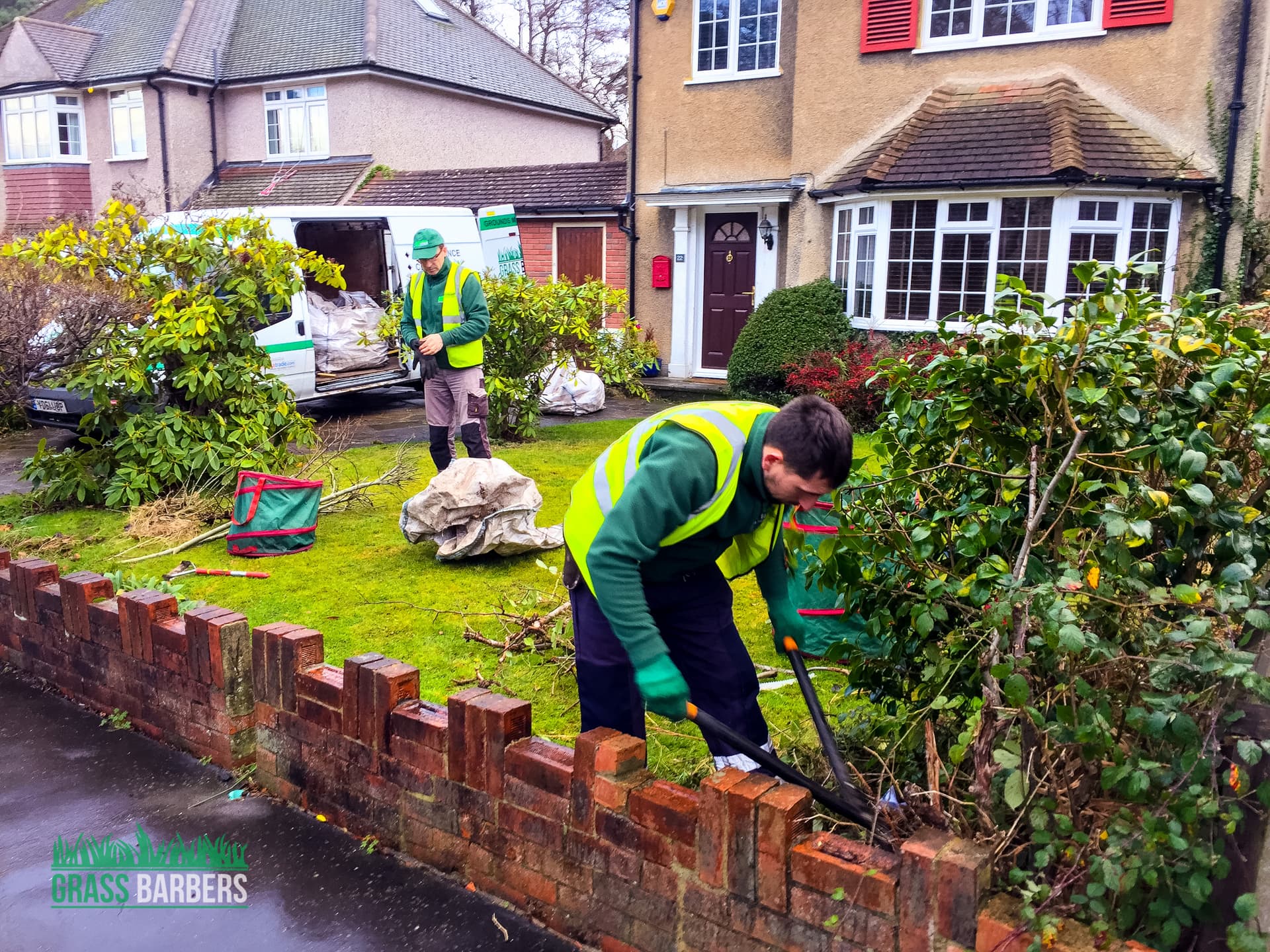
Bramble and bindweed removal. Autumn is the single best moment to tackle both. Bramble canes that have arched over and rooted at the tip need cutting out and grubbing at the crown; bindweed stems should be carefully traced back and the brittle roots removed as completely as possible. Both are far easier to follow now than under spring growth — and any regrowth next year will be weak enough for a simple follow-up visit.
Cutting back perennials and dead growth. Herbaceous perennials that have finished — hostas, daylilies, hardy geraniums — get cut to ground level. Ornamental grasses and anything with structural seed heads can stay for winter interest and wildlife, but collapsed, slimy growth needs removing before it harbours slugs.
Hedge trimming and shrub reduction. Most deciduous hedges take a final trim in autumn before winter. Overgrown shrubs that have outgrown their space can be reduced hard now while they're dormant, without the stress of a growing-season cut.
Lawn care before winter. The last mow of the year, a final edge, and scarifying out the moss and thatch that built up over summer. Lawns left long and matted over winter come out of it patchy and moss-dominated; lawns cut and cleared in autumn green up far earlier in spring.
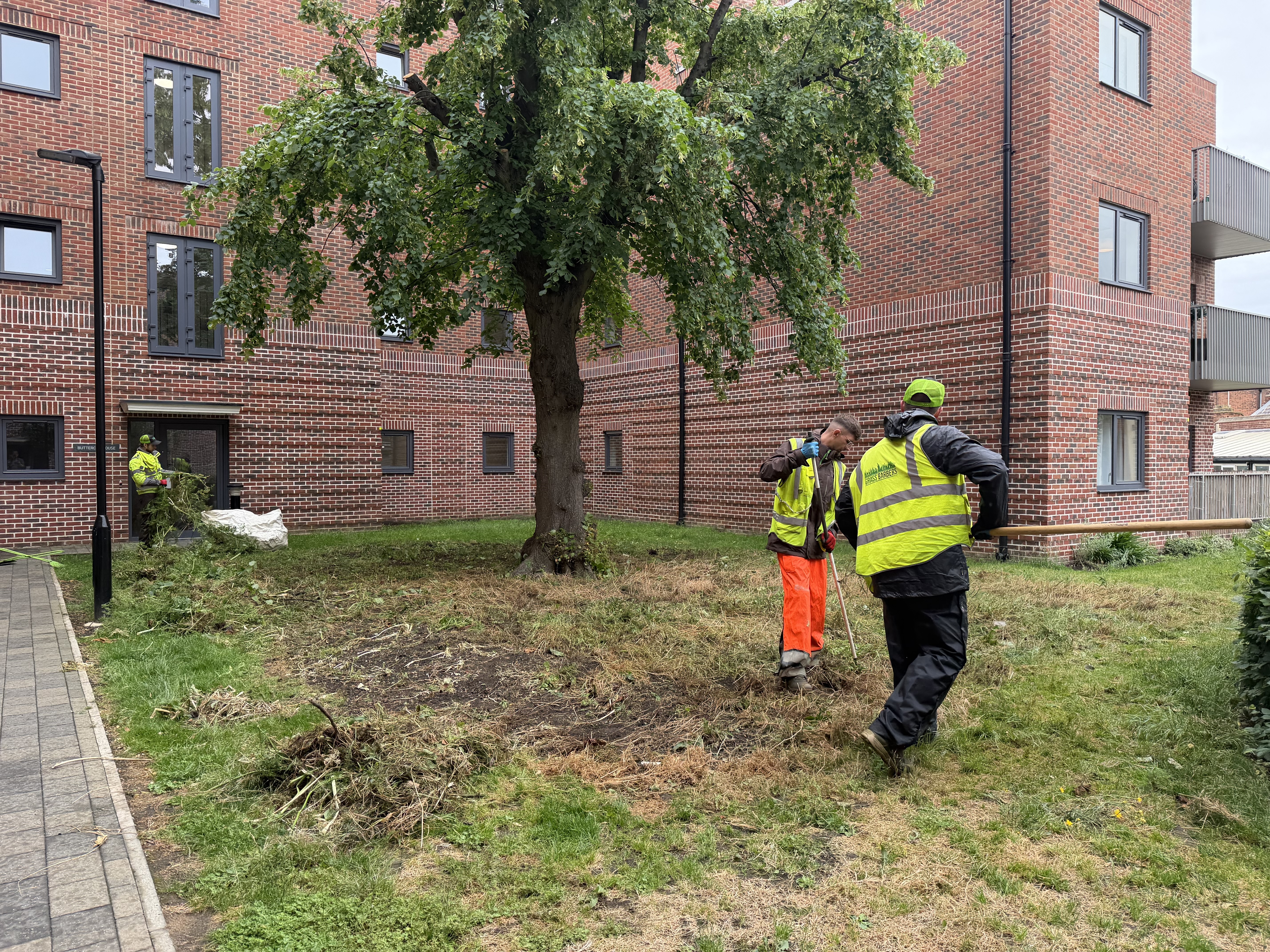
Green waste removal. An autumn clearance generates a surprising volume of material — often a van-load or more from a typical London garden. As registered waste carriers, we take everything away on the day and process it at accredited green waste facilities, so there's no skip on the drive and no pile of bags waiting for the council.
Leave it too late and the job gets bigger
Gardens that miss their autumn clearance don't stay still — they get worse through winter. Brambles root deeper. Bindweed spreads unseen under leaf litter. Wet leaves compact into a layer that takes twice as long to shift in February as it would have in November. And fences already weakened by ivy or leaning shrubs are the first thing winter storms bring down.
By spring, a two-hour autumn tidy has become a full day's restoration. The gardens that look effortless in April are almost always the ones that were properly cleared in November.
Autumn garden clearance across London and Surrey
Grass Barbers carries out autumn garden clearances across South London and Surrey — from one-off end-of-season tidy-ups for private gardens to full overgrown-plot restorations for landlords, letting agents and commercial sites. Every clearance includes ethical green waste removal by registered waste carriers, and we can follow up with a regular maintenance plan, a winter gritting arrangement for commercial sites, or simply leave the garden ready for you to enjoy in spring.
You can book an autumn garden clearance online in minutes at a fixed hourly rate, or request a free quote for larger or commercial sites. If you're not sure how long your garden will take, our hours calculator gives a realistic estimate before you book.
Frequently asked questions
When is the best time for an autumn garden clearance?
Late October to early December across London and Surrey. Leaves are mostly down, plants are dormant, and the ground is still workable. Earlier than that and you'll be clearing the same leaves twice; later and frozen or waterlogged ground makes the job slower and harder on the lawn.
Is autumn a good time to remove brambles and bindweed?
The best time. Both plants are going dormant, so cutting and grubbing them out now means no regrowth until spring — and any that does return is weak. Bramble crowns are visible and accessible, and bindweed roots lift cleanly from damp autumn soil. Wait until spring and you'll be fighting fresh growth from an established root system.
Do I need to clear leaves from my lawn before winter?
Yes. A compacted layer of wet leaves blocks light and air to the grass, encourages moss and fungal disease, and can kill patches of lawn outright over winter. Leaves on beds can stay as a free mulch, but lawns, paths and patios should be cleared.
How much does an autumn garden clearance cost?
It depends on garden size and how overgrown it is. We work at a fixed hourly rate with online booking, so you only pay for the time the clearance takes — most domestic autumn clearances take between two and five hours. Larger or heavily overgrown plots are quoted after a free site survey. Green waste removal is included.
Can you clear a garden that's been left for years, not just one season?
Yes. Multi-year overgrown gardens are our speciality — bramble thickets, self-seeded saplings, collapsed sheds of ivy and buried lawns. An autumn start is ideal: we clear the bulk of the growth while it's dormant, then follow up in spring for any regrowth and a fresh start on the lawn.